Jaipur’s Easiest Hospital for Cashless Treatment: How Srishti Hospital Is Simplifying Healthcare
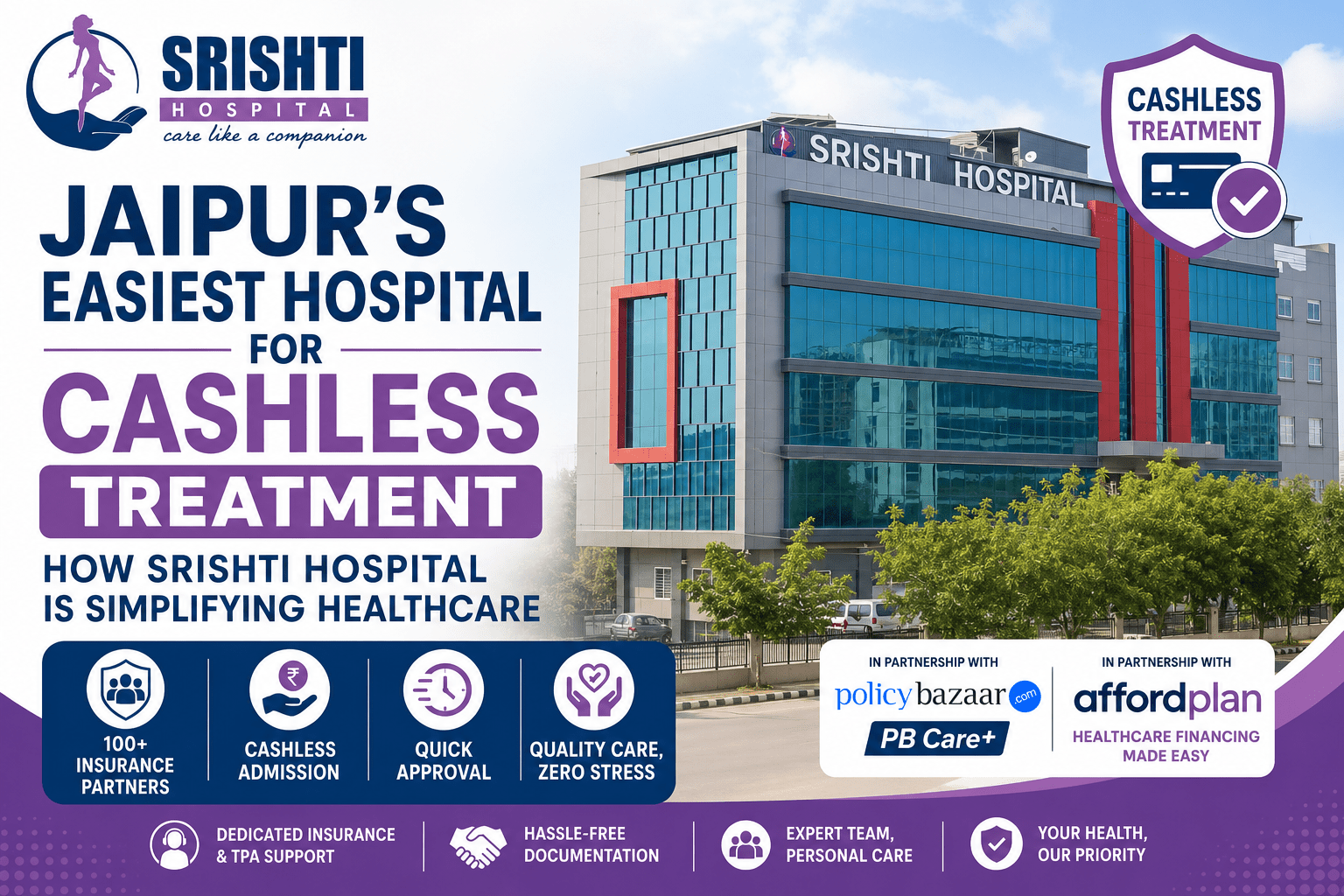
Author: Deepak Guupta Chief Executive Officer, Srishti Hospital, Jaipur Healthcare Should Be Simple, Not Stressful Healthcare is stressful enough. Patients should never have to struggle with insurance paperwork, approval delays, or financial uncertainty while seeking medical care. Yet, for many families, availing cashless treatment in Jaipur can be confusing and overwhelming. Multiple forms, insurance approvals, TPA coordination, policy verification, and documentation can become an additional burden during an already difficult time. At Srishti Hospital, we believe healthcare should be compassionate—not complicated. That belief has shaped our vision of becoming Jaipur’s easiest hospital for cashless treatment. This is more than a tagline. It is a commitment supported by systems, technology, dedicated teams, and strategic partnerships that place the patient at the center of everything we do. Why Cashless Treatment Matters Health insurance exists to reduce financial stress during medical emergencies and planned treatments. However, many patients and families still have questions about the process, including: Whether their insurance policy will be accepted How cashless admission works What documentation is required How TPA approvals are handled How treatment estimates are processed How the claim procedure works At Srishti Hospital, our objective is simple: to make the cashless hospitalization experience as smooth and transparent as possible for every eligible patient. What Makes Srishti Hospital Different? Providing cashless treatment in Jaipur is not simply about having insurance tie-ups. It requires operational excellence and coordinated support. At Srishti Hospital, our Front Office, Insurance & TPA Desk, Back Office, Billing Team, and Clinical Departments work together to provide timely assistance throughout the patient’s hospitalization. Our teams assist patients with: Insurance verification Cashless admission guidance Documentation support TPA coordination Communication with insurance providers Administrative processing Discharge coordination The goal is to create a patient journey that reduces unnecessary delays and administrative stress. Dedicated Insurance & TPA Support One of the biggest challenges during hospitalization can be understanding insurance procedures. Our dedicated Insurance & TPA team helps patients and families navigate these processes with greater confidence. From admission to discharge, our coordinators work with insurance companies and Third Party Administrators (TPAs) to facilitate cashless treatment for eligible patients, in accordance with applicable insurer guidelines. This support allows patients and their families to spend less time worrying about paperwork and more time focusing on recovery. A First-Mover Partnership with Policybazaar PB Care+ As part of our commitment to improving the patient experience, Srishti Hospital is proud to be among the first hospitals in Rajasthan to collaborate with the Policybazaar PB Care+ Program. This strategic partnership is designed to provide eligible Policybazaar customers with a more coordinated and patient-friendly hospitalization experience. The PB Care+ program provides dedicated support to help eligible patients navigate insurance-related procedures more efficiently and conveniently. Healthcare innovation is not only about advanced medical technology. Sometimes, innovation means removing unnecessary barriers between patients and quality healthcare. Making Healthcare More Affordable with Affordplan Financial planning is another important part of healthcare. Even patients with insurance may have expenses that require careful budgeting. To make healthcare more accessible, Srishti Hospital has partnered with Affordplan, becoming one of the pioneering hospitals in Rajasthan to introduce this patient-friendly healthcare financing platform. Affordplan enables patients to plan treatment expenses through flexible payment solutions. Eligible users may also receive value-added benefits such as: Complimentary accidental insurance Life insurance coverage Reward points on transactions This approach can help families manage treatment expenses more comfortably while accessing quality healthcare. Technology + People = A Better Patient Experience At Srishti Hospital, we believe technology should simplify healthcare—not complicate it. Our investment in digital healthcare systems, standardized workflows, and coordinated insurance processes helps create a faster and more transparent experience for patients. But technology alone is never enough. It is our people who make the real difference. Every successful cashless admission represents the combined efforts of reception executives, insurance coordinators, billing professionals, nursing staff, doctors, administrators, and support teams working together with one purpose: delivering exceptional patient care. More Than Insurance—It’s About Trust Choosing a hospital is one of the most important decisions a family makes. Patients look beyond medical expertise. They seek: Transparency Responsiveness Clear communication Compassion Reliable support That is why our goal extends beyond providing cashless hospitalization in Jaipur. We strive to deliver an experience built on trust, empathy, efficiency, and accountability. Our Vision for Jaipur Healthcare should never be delayed because administrative processes become obstacles. Every patient deserves timely treatment, financial clarity, and compassionate support. As healthcare continues to evolve, hospitals must move beyond simply treating illnesses. They must also build systems that make quality healthcare easier to access. That is the philosophy driving Srishti Hospital every day. We remain committed to strengthening our insurance partnerships, improving digital workflows, enhancing patient services, and continuously simplifying the healthcare journey. Because when patients choose us, they deserve to focus on healing—not paperwork. Experience Jaipur’s Easiest Hospital for Cashless Treatment Whether you are planning an elective procedure or facing an unexpected medical emergency, our dedicated teams are here to help you navigate the insurance process with confidence. If you are looking for a cashless hospital in Jaipur, health insurance hospital in Jaipur, or a multispeciality hospital with dedicated insurance support, Srishti Hospital is committed to making your healthcare journey simpler, faster, and more patient-centric. Srishti Hospital Care Like a Companion Frequently Asked Questions Which hospital provides cashless treatment in Jaipur? Srishti Hospital offers cashless treatment for eligible patients through collaborations with multiple insurance companies and TPAs, supported by a dedicated Insurance & TPA Help Desk. How does cashless hospitalization work? Once insurance eligibility is verified and authorization is approved by the insurer or TPA, eligible treatment expenses are settled directly between the hospital and the insurance provider according to the applicable policy terms and conditions. Does Srishti Hospital provide insurance assistance? Yes. Dedicated insurance coordinators assist patients with documentation, insurance verification, TPA coordination, and cashless claim support throughout their hospital stay. What is Policybazaar PB Care+? Policybazaar PB Care+ is a patient support program designed to enhance the hospitalization experience for eligible customers by providing